Fueled by Philanthropy
St. James: Firehouse Coffee Shop
Learn more about this café, operated by the St. James chapter of the Youth Empowerment Project.
Read More


Route 66 links lives and lifetimes. The famed Mother Road was born in the Ozarks on April 30, 1926. That day, at about 4 p.m., a telegram was sent from downtown Springfield to Washington, D.C., requesting what would become the iconic name for a stretch of highway from Chicago to Los Angeles.
That moment started a century-long (and counting) journey, one that has manifested in both literal miles on the road and figurative trips through pop culture. Just one example is “(Get Your Kicks on) Route 66,” a hit written by Bobby Troup and recorded by the King Cole Trio in the 1940s. It was a song, but it was part of a movement: The road meant something to people, whether it was the representation of a dream or the path to a better life.
At the end of the day, those realities are made possible by people. One was John T. Woodruff, a Springfield businessman, community supporter and “Good Roads” champion who served as the first president of the U.S. Highway 66 Association in the 1920s.
His early work joins that of countless others who have intersected with this road, whether it was by running a motor court or a cafe, or helping improve the town where they lived.
In the following pages, you’ll discover projects meant to enhance life along Route 66’s path across the CFO’s footprint. Some efforts focus on improving quality of life for people who live in those places. In other cases, the work is designed to introduce communities to the world.
Even though a century has passed, the work isn’t done. And like in days gone by, it’s people who keep the communities along the road moving forward. Individual actions together create lasting change — both for visitors, but also those who call a place home.
—Feature stories by Kaitlyn McConnell
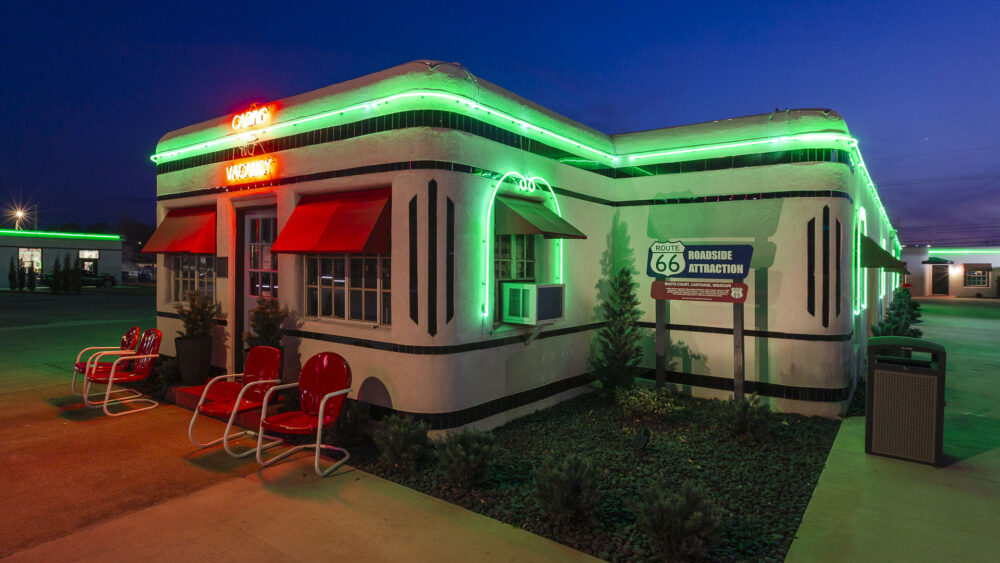
Photo by Aaron Scott
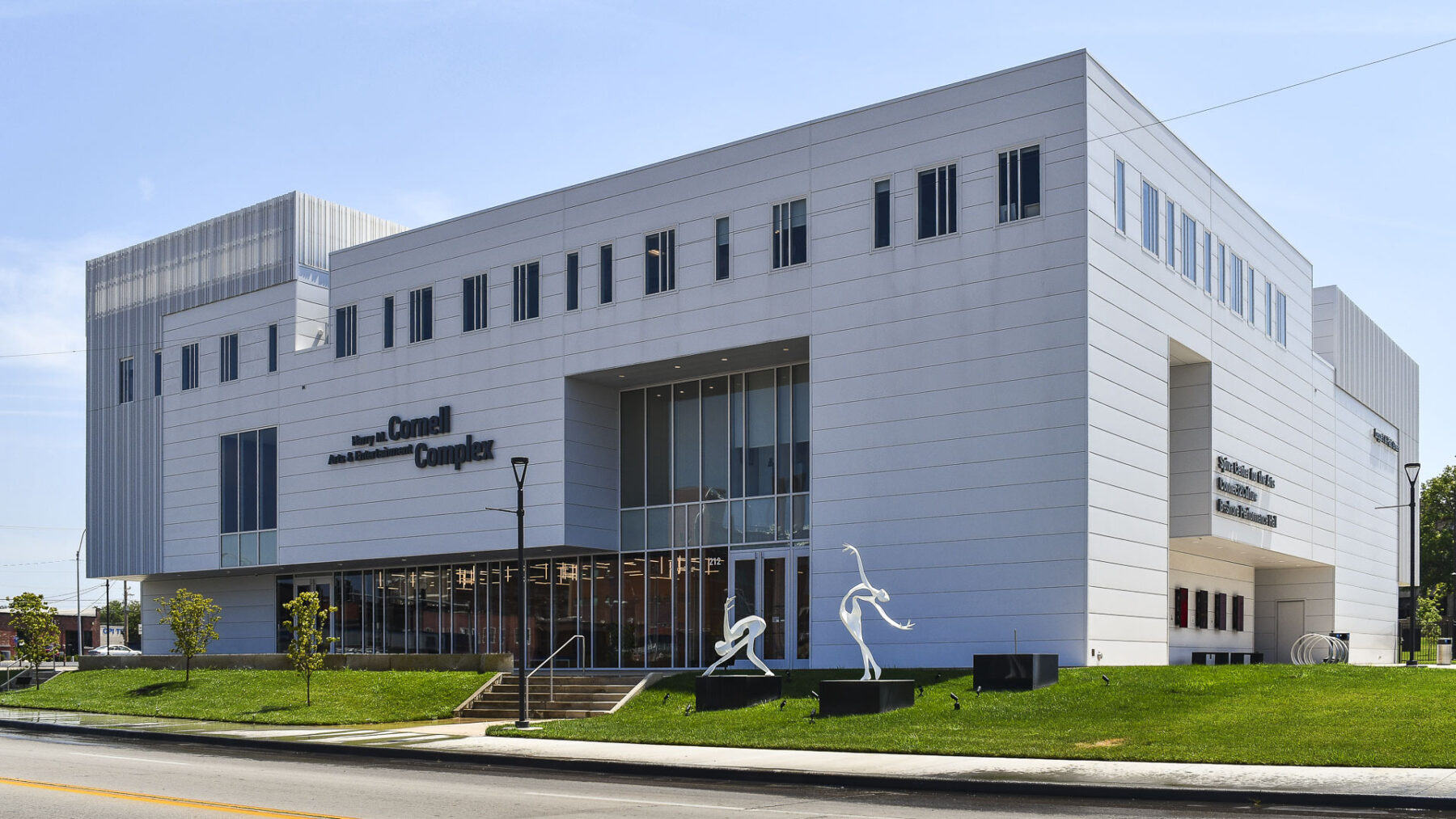
“The biggest strength of the complex is that it brings different art forms together in one place — visual arts through Spiva and performing arts through Connect2Culture. That combination allows the building to serve a wide range of artists and audiences.” Photo by Kaitlyn McConnell
The Harry M. Cornell Arts & Entertainment Complex is a hub for artistic activities, local creativity and community building in Joplin and beyond.
Two nonprofits are leading these missions: Connect2Culture and the Spiva Center for the Arts, complementary organizations that moved into the Cornell Complex upon its completion in November 2022. More than $19 million was raised through the facility’s capital campaign, which was administered through multiple funds held with the CFO and the Joplin Regional Community Foundation.
Among other activities, the center’s auditorium is home for performing arts, and Spiva’s gallery showcases an evolving slate of exhibitions — including the nationally recognized PhotoSpiva, a juried photography show that began in 1977. The complex also hosts classes and workshops for all ages.
“The building provides an intentional space for the arts, and the work of C2C and Spiva is what makes it vibrant, active and full of energy,” says Emily Frankoski, executive director of C2C. “The biggest strength of the complex is that it brings different art forms together in one place — visual arts through Spiva and performing arts through Connect2Culture. That combination allows the building to serve a wide range of artists and audiences.”
Photo by Aaron Scott
The Boots Court, a vintage Route 66 motel in Carthage, is on a journey of renewal.
Opened in 1939, it drew travelers — including, some say, Clark Gable — for decades until it fell into decline. Two sisters purchased the motor court to save it, beginning a restoration process that took it back into the minds of Route 66 travelers. When they decided to retire in 2021, the Boots Court Foundation stepped in to continue that work.
“Boots Court is an outstanding example of early motor court lodging and one of the few original motels still operating along historic Route 66,” says Betsy Flanigan, president of the Boots board. “Its preservation safeguards an important piece of Carthage’s history while strengthening the city’s connection to Route 66.”
Restoration efforts include extensive interior and exterior repairs to the original motel building. Period furnishings enhance the rooms. Next door, a vintage gas station has been transformed into a visitors center.
“Nearly every inch of the structure was inspected, repaired or replaced, with great care taken to preserve the building’s historic integrity,” Flanigan says, expressing gratitude for the Carthage Community Foundation’s support of those restoration efforts. “Today, guests are invited to unplug, unwind and experience the nostalgia of an earlier era.”
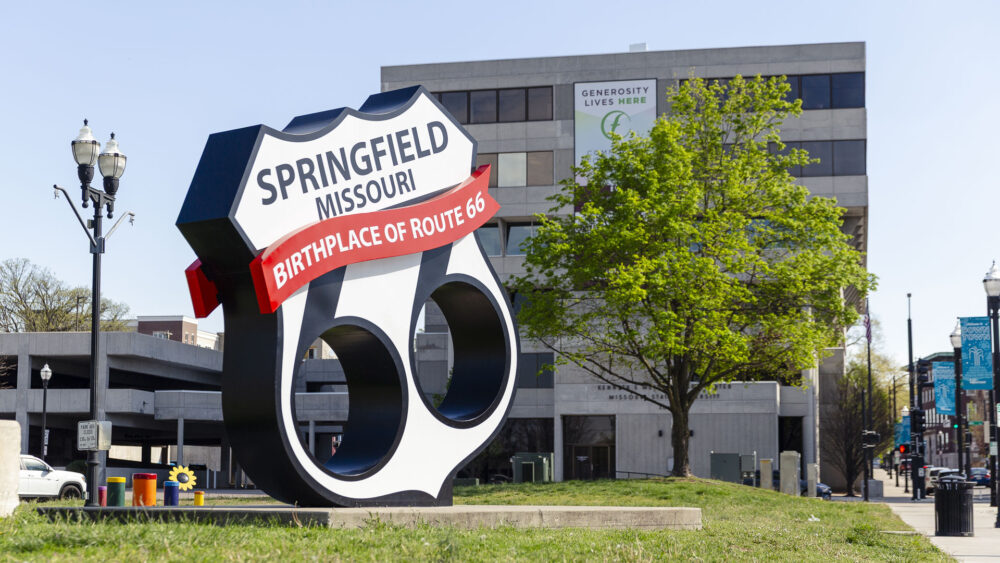
Photo by Aaron Scott
Springfield is celebrating Route 66’s centennial in style. The Mother Road’s birthplace — and home to the CFO headquarters, which is located within sight of where the thoroughfare was “born” in 1926 — is officially starting the festivities through the National Route 66 Kickoff Celebration.
From April 30 to May 2, the event marks the moment through music (including a concert headlined by Little Big Town), a classic car show and parade, landmark dedications and more. Those festivities are supported by the City of Springfield and Visit Springfield through a fund with the CFO. The CFO has also supported efforts to add public art along the historic road like Sculpture Walk Springfield and the Overlay mural festival.
The fun continues in August when the city’s long-running Birthplace of Route 66 Festival returns. And that’s not to mention the many local landmarks that connect the road’s past to its future in Springfield.
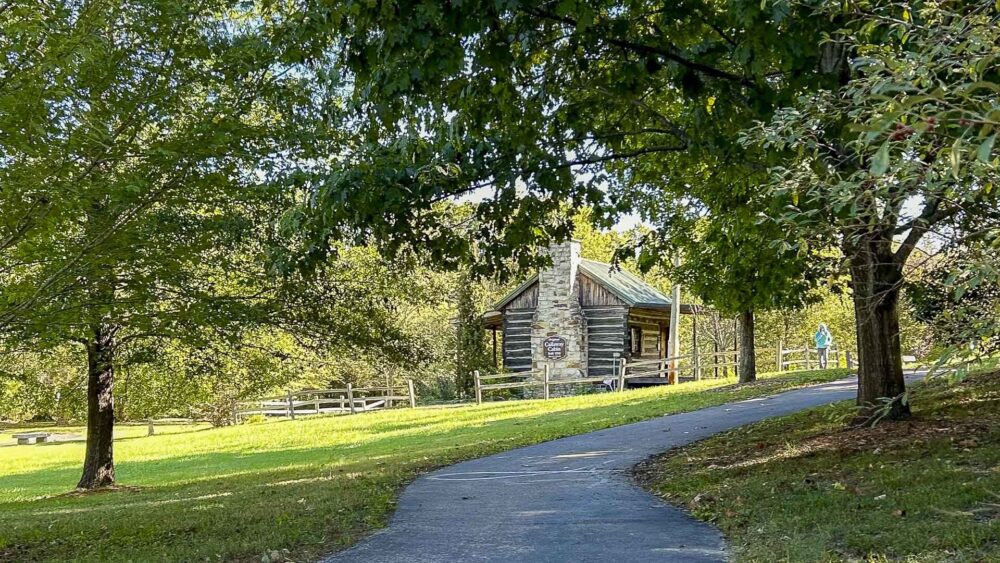
Photo by Kaitlyn McConnell
Whether they’re traveling from down the street or across the globe, Hidden Waters Nature Park takes visitors on a journey into Ozarks history and natural beauty.
The park along Route 66 in Marshfield is the realized dream of Dan and Zoe Beckner, who founded it in 2003. Over the past 23 years, Hidden Waters — which holds a fund with the Marshfield Area Community Foundation — has expanded multiple times in acreage and amenities.
“Many travelers locate our park and use it as an opportunity to bring lunch, stretch their legs, let the kids romp and walk their dogs,” says Chris Davis, president of the Hidden Waters board of directors.
The historic Callaway Cabin, built in the 1850s, was moved to the park and reopened in 2010. Trails and interpretative displays share history. In 2023, the park opened a welcome center for classes and educational events. But the work isn’t done. Future improvements include a metal bridge, constructed in the style of Frank Lloyd Wright, and a ‘green’ parking lot with a lodge-type pavilion that will connect sidewalks and landscaping.
Hidden Waters isn’t the only Route 66 stop in Marshfield. A new Route 66 park, featuring a vintage service station, is under construction about a mile away.
Provided photo
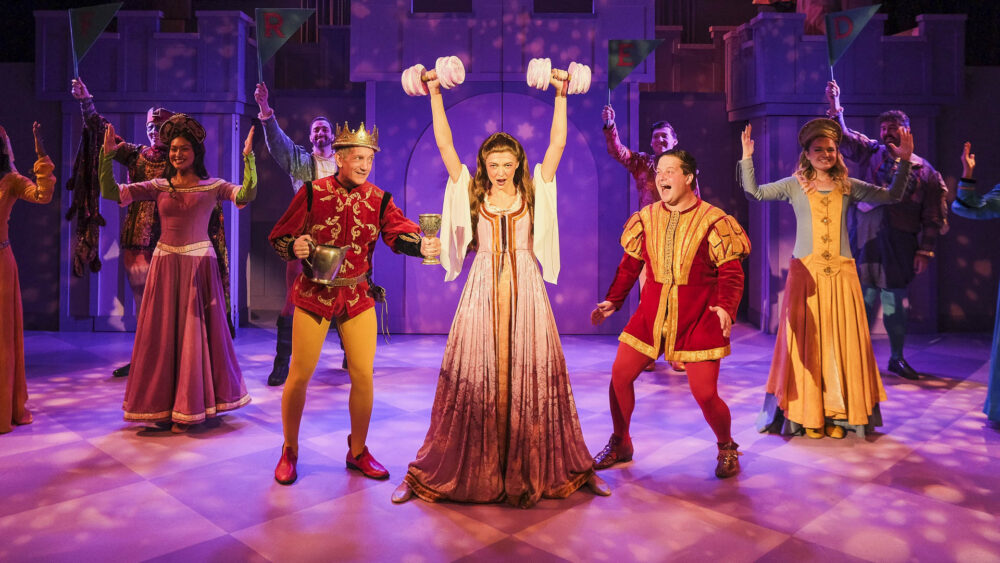
Since 1987, Ozark Actors Theatre has connected the Rolla community (and beyond) with the performing arts. The CFO nonprofit partner — which has received grants from the Meramec Regional Community Foundation — began out of a desire to bring quality professional theatre to the Ozarks. That dream has grown into a legacy: OAT is one of a few professional summer stock theatres in rural Missouri. It’s also become a community fixture through more than 100 shows — ranging from comedies to full-scale musicals — and is recognized as an Equity Small Professional Theatre. In 2026, its summer season begins in June with “The Addams Family.”
Phelps County Community Foundation, the CFO’s newest affiliate, partnered with Rolla Public Schools and Four Rivers Community Health Center to raise nearly $2 million to open an early childhood education center. The new facility will expand preschool enrollment to all four-year-olds in the district and provide on-site access to medical and dental care. The center is expected to open in time for the 2026–27 school year.
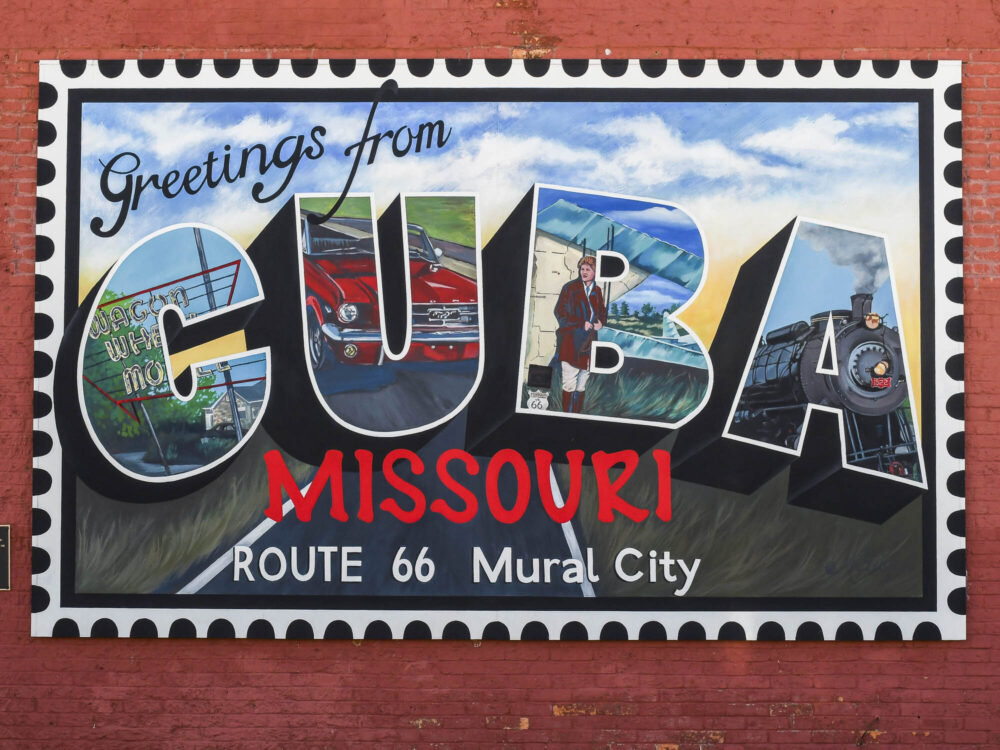
Photo by Kaitlyn McConnell
Cuba’s history lives on through 15 murals that tell the Crawford County town’s colorful story. That effort is part of a larger, decades-long mission led by Viva Cuba, a nonprofit partner of the Crawford County Foundation Inc. and the CFO, to help attract visitors and jobs to town.
Among other topics, the town’s murals preserve memories of local business and industry, the role of rivers in local life, and actress Bette Davis’s 1948 visit. The story expands beyond Cuba to a website — “tour” the murals and read the backstories of their significance at cubamomurals.com.
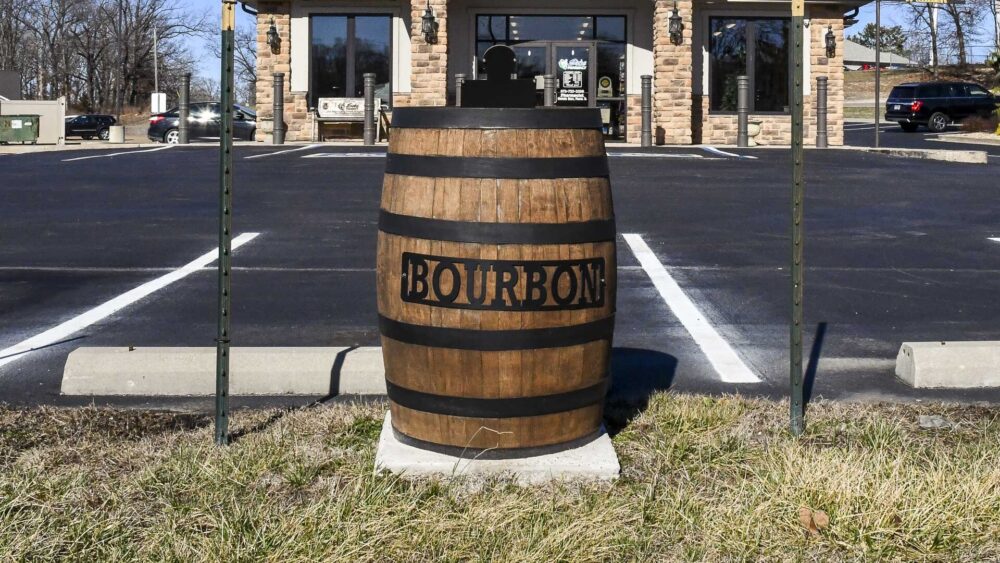
Photo by Kaitlyn McConnell
Bourbon’s history is found in barrels all over town. Local lore says the name of the Crawford County community — which is served by the Bourbon Community Foundation and the Crawford County Foundation Inc. — originated because barrels (of bourbon) outside a store helped travelers identify where they were.
In 2019, that legend led Bourbon Economic Development to an idea: Why not place barrels around town, helping create a “visual identity” via local stops?
“Given our name, the bourbon barrel was the perfect canvas to showcase our local art and history,” says Chuck Ray, president of BED. So far, 24 uniquely decorated barrels have been placed at locations with historical significance, high-traffic business areas and community hubs.
“We’ve been overwhelmed by the talent of the local artists ranging from our high school students to group members with metal working skills and talented wood artisans who stepped up to remodel these barrels,” Ray says. He notes each barrel has its own personality, much like the town itself, and is characterized by suppliers being a local cooperage operation and Bourbon-based craft whiskey operation.
Future plans include property development of the Bourbon Barrel Tour trailhead, which is supported by a grant from the Crawford County Foundation’s Impact 100 giving circle. When complete, the site — located on Route 66 and adjacent to the Bourbon Business/Community Development Center — will serve as an anchor for the barrel tour.
“Having this central hub allows us to welcome travelers from all over the globe, providing them with a gateway to explore our local history while boosting our economic vitality,” Ray says.
“For Bourbon, these barrels are more than just decorations; they are landmarks. They serve as a physical bridge between our past and our future. By placing them at significant sites, we’re prompting residents and visitors alike to pause and ask, ‘What happened here?’ It reinforces a sense of place and pride that is unique to our corner of the Ozarks.”