May 6, 2026
Smithsonian director connects local history to civic participation in keynote address
The fourth-annual Rural Philanthropy Summit, co-presented by the Community Foundation of the Ozarks and Philanthropy Missouri, showcased ways grantmakers are partnering with local leaders to power innovation in rural communities on April 24 at Missouri S&T in Rolla.
The statewide conference, sponsored by the Patterson Family Foundation and Marillac Mission Fund, brought together more than 120 rural partners and funders, including CFO affiliate foundation leaders. Presentations explored how philanthropy can deepen existing connections and belonging in rural communities, which are complex. Grantmakers were invited to move beyond a view of "rural" as simply "not urban," and to encourage innovative solutions that listen to people with lived experience.
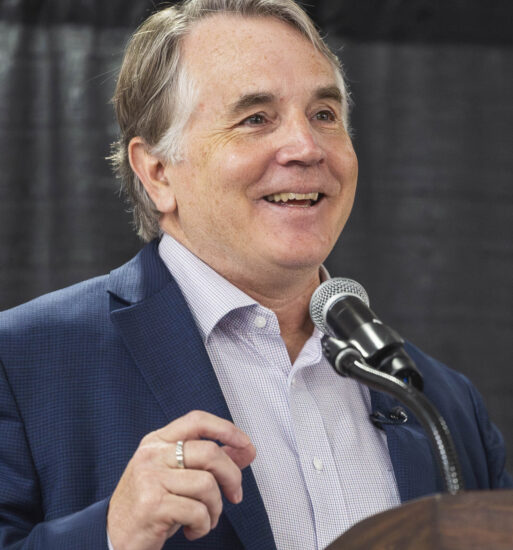
Andy Mink, director of the Smithsonian Institution’s Rural Initiatives, addresses attendees at the fourth-annual Rural Philanthropy Summit, held at Missouri S&T in Rolla. “All the things that make a healthy community are very directly tied to local and family history.”
“Any of us with a rural lived experience understand there’s a very big nuance to reality,” said Andy Mink, director of the Smithsonian Institution’s Rural Initiatives, in his keynote address. “There’s a lot of details that go into, not only the place, but the people who have a rural perspective and a rural background.”
Mink also illustrated how knowledge of local history improves civic engagement, showing people are 28% more likely to vote, 20% more likely to volunteer and five times more likely to run for office when they have a better understanding of a community’s history.
“All the things that make a healthy community are very directly tied to local and family history,” Mink said.
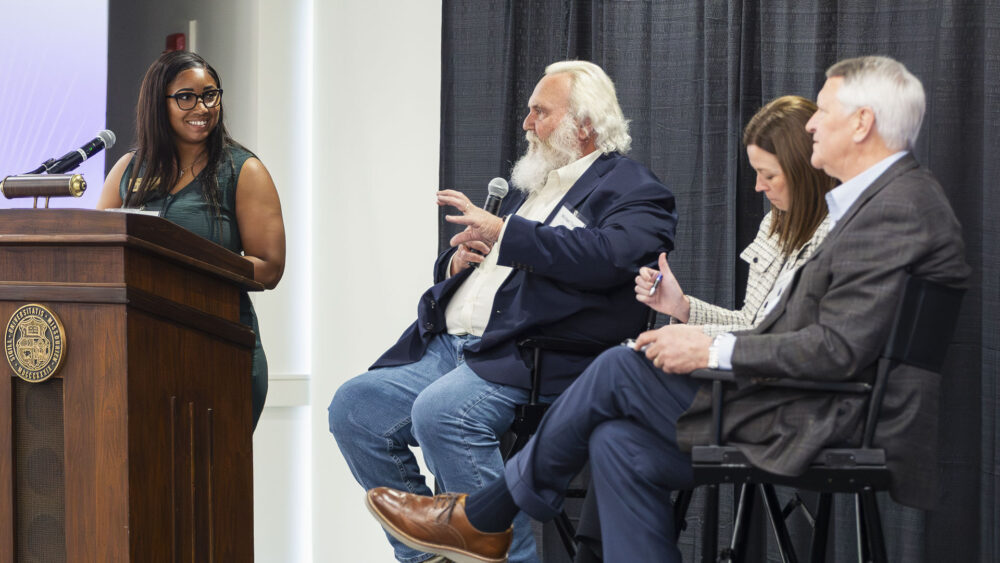
Taylor Clark, community development specialist for the University of Missouri Extension, moderates the “Celebrating Innovation” panel at the 2026 Rural Philanthropy Summit with, from left to right: Mayor Mike Topliff, City of West Plains; Patrice Shumate, founder of A Village for Good; and Dr. David Barbe, retired physician and president of Mountain Grove Area Community Foundation.
During the breakout sessions, attendees learned how philanthropy can power innovation to address needs and improve life in rural communities, including:
- Venture philanthropy for rural economic development
- Connecting local school districts with national literacy initiatives
- Smarter partnerships to rebuild trust in local government
- New approaches to grantmaking in rural communities
- Development of new infrastructure for rural health
The afternoon featured an idea exchange through a variety of “Table Topics” and an update on Philanthropy Missouri’s Rural Funder Network. The conference concluded with a “Celebrating Innovation” panel discussion on ways new technologies are impacting philanthropy, health care and economic development in rural communities.
“As we uplift innovation, we’re not only talking about what’s new or flashy. We’re talking about what already exists in rural communities — ideas, leadership, and deep knowledge of place,” said Michelle Miller, president and CEO of Philanthropy Missouri, in her opening remarks. “Innovation, in this context, is about recognition and connection, ensuring ideas closest to the lived experience are more visible, more heard and more connected to resources that help them move forward.”